
 260 Reviews


Stinging insects are a common part of life across Texas. Warm weather, long summers, and plenty of flowering plants make the region a comfortable place for bees, wasps, and hornets to build nests. Most of the time, these insects simply go about their work, pollinating plants or searching for food. Trouble starts when a nest appears too close to people.
A wasp nest tucked under a roofline or a group of yellowjackets digging into the ground near a walkway can quickly turn a normal yard into a stressful place. One wrong step, a loud vibration, or an accidental disturbance may trigger a swarm response. That risk is exactly why many homeowners turn to professional pest control teams for help.
Handling stinging insects safely is not as simple as spraying a store-bought product and hoping for the best. Professionals rely on training, planning, proper equipment, and a calm step-by-step approach. When done correctly, the problem is removed while keeping people, pets, and property safe.
Let’s walk through how experienced Texas pest control specialists deal with stinging insect problems from the first inspection to the final prevention steps.
Why Stinging Insects Can Become a Serious Problem Around Homes
Bees and wasps are important parts of nature. They pollinate plants and help control certain insect populations. The issue appears when nests are built where people live and work.
Texas yards offer plenty of nesting spots. Roof eaves, sheds, attics, tree branches, wall cavities, and even underground burrows can attract stinging insects. Once a colony forms, activity increases quickly. Some species defend their nests very aggressively.
A few of the insects that cause the most concern in Texas include:
- Paper wasps, often seen hanging umbrella-shaped nests under rooflines
- Yellowjackets, which commonly nest in the ground or inside wall voids
- Hornets, known for large aerial nests attached to trees or structures
- Carpenter bees, which drill into exposed wood
- Africanized honey bees, which may swarm and defend nests strongly
Even a single nest can hold dozens or hundreds of insects. When disturbed, they react quickly. Multiple stings can happen within seconds.
For people with allergies to insect venom, a sting can trigger a medical emergency. Even without allergies, repeated stings can cause swelling, pain, and panic.
That’s why professionals approach these situations with caution.
The First Step: Careful Inspection of the Property
Before any treatment happens, a pest control technician begins with a full inspection. This step might seem simple, though it shapes everything that follows.
During the inspection, the technician looks for several details:
- The type of stinging insect
- The location of the nest
- The size of the colony
- Nearby entry points or hidden nests
- Areas where people and pets travel
Correct identification matters a lot. Different insects behave differently. A honey bee colony inside a wall requires a different plan than a small paper wasp nest under a porch rail.
Skilled people often watch insect flight patterns to track where they enter and exit. Sometimes the nest itself is hidden, especially when it sits inside siding, attics, or underground.
This step also allows technicians to notice safety concerns. For example, nests near electrical equipment, rooflines, or children’s play areas require extra planning before removal.
Understanding the Behavior of Wasps, Bees, and Hornets
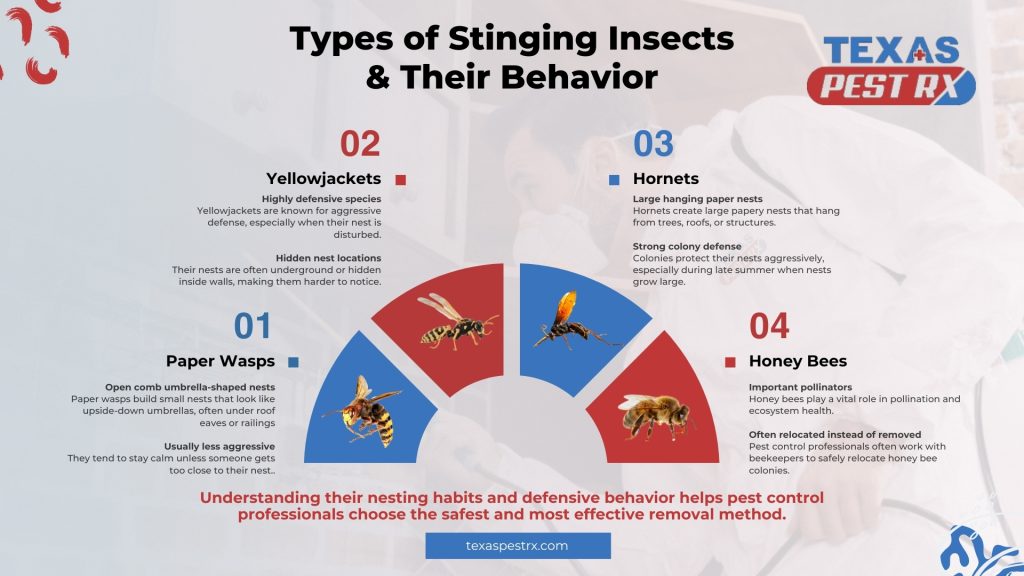
Not all stinging insects act the same. Knowing their habits helps professionals remove them safely.
Paper Wasps
Paper wasps build open comb nests that look like upside-down umbrellas. These are often attached to eaves, railings, or outdoor furniture.
They tend to be less aggressive unless their nest is disturbed. Still, they will defend it if someone gets too close.
Yellowjackets
Yellowjackets are among the most defensive species. Their nests may sit underground or inside walls.
Because the nest opening can be hidden in grass or landscaping, people sometimes step on it without noticing. That surprise is when multiple stings often occur.
Hornets
Hornets create large hanging nests made of papery material. These nests may grow quite large by late summer.
Colonies guard the nest strongly. Attempting removal without proper equipment can be risky.
Honey Bees
Honey bees are important pollinators. Many pest control companies prefer relocation rather than elimination when possible.
If a hive forms inside a wall or attic, professionals may coordinate with beekeepers who can move the colony safely.
Understanding each insect’s behavior allows technicians to approach the situation calmly and choose the right treatment method.
Planning the Safest Treatment Strategy
Once the inspection is complete, the technician develops a plan. Safety guides every step.
Several factors shape that plan:
- Time of day
- Nest location
- Colony size
- Proximity to people or pets
- Type of insect
For example, many treatments happen in the evening. At that time, most of the insects have returned to the nest, and activity slows down. Lower temperatures also reduce flight behavior.
Technicians may block off the area or advise homeowners to stay indoors during treatment. If a nest sits near a doorway or walkway, temporary restrictions help prevent accidental contact.
Careful preparation helps avoid unnecessary agitation of the colony.
Protective Gear Used by Pest Control Technicians
Skilled technicians wear protective clothing designed for stinging insect work. This equipment helps shield them from multiple stings during treatment.
Common gear includes:
- Full protective suits made from thick fabric
- Veiled helmets that cover the face and neck
- Heavy gloves
- Closed boots
- Respiratory protection when needed
The suit material prevents stingers from reaching the skin. Veils keep insects away from the eyes and face.
Most homeowners understandably do not own this type of equipment. Without protection, even a small nest removal attempt can lead to painful stings.
Professional Treatment Methods
Different nests require different approaches. Pest control technicians choose treatment methods based on the situation rather than relying on a single product.
Targeted Insecticide Application
For many wasp or hornet nests, technicians apply specialized products directly to the nest structure. These treatments spread through the colony quickly.
The goal is to control the colony with as little disturbance as possible.
Dust Treatments for Hidden Nests
When nests sit inside wall voids or underground cavities, dust formulations may be used. These fine powders travel through entry holes and reach insects moving in and out of the nest.
This method helps treat colonies that cannot be accessed directly.
Removal of Abandoned Nests
After treatment, technicians often remove the nest structure if it is accessible. While an empty nest rarely attracts a new colony, removing it helps prevent confusion later in the season.
Bee Relocation When Possible
When honey bees are involved, pest control teams may work with beekeepers for honey bee control who safely relocate the colony. This approach protects pollinators while removing the risk from the property.
Why DIY Wasp Removal Often Goes Wrong
It is easy to find do-it-yourself pest control videos online. Many make nest removal look simple. Real situations rarely work that way.
Several problems appear when homeowners attempt to remove stinging insect nests on their own.
Limited protection
Most people do not have protective suits. One sting may cause panic, which leads to sudden movement and more stings.
Poor timing
Daytime removal attempts often disturb a fully active colony.
Wrong product choice
Retail sprays may not reach deep nests hidden inside walls or underground.
Hidden nests
Treating a visible nest may not solve the problem if a larger colony sits inside a structure.
Technicians deal with these situations regularly. Their training and equipment help avoid unnecessary risk.
Preventing Future Stinging Insect Activity
After a nest is removed, the next goal is preventing another colony from forming in the same area.
Technicians often point out a few practical steps that help reduce future activity.
Seal Small Openings
Cracks around siding, vents, and rooflines can attract insects searching for sheltered nesting spots. Sealing these openings reduces the chances of hidden nests.
Keep Outdoor Areas Clean
Food scraps, uncovered trash bins, and sugary drinks can attract yellowjackets. Keeping outdoor spaces tidy removes easy food sources.
Maintain Landscaping
Dense shrubs or unused yard areas sometimes hide ground nests. Regular trimming and yard care make it easier to notice insect activity early.
Check Eaves and Overhangs
Paper wasps often start small nests in protected corners during spring. Removing a tiny early nest is far easier than dealing with a large colony later.
Routine observation around the property can make a big difference.
When to Call a Pest Control Service
A few situations call for professional help right away.
You should consider contacting a pest control service if:
- A nest is large or active
- The nest sits near a doorway or walkway
- Insects are entering a wall or attic
- Someone in the household has sting allergies
- Multiple nests appear on the property
Trying to handle these situations alone may put people at risk.
Professional pest control teams handle stinging insect issues across Texas every season. Their experience allows them to work calmly and safely, even when nests appear in difficult locations.
Homeowners searching for dependable help often reach out to Texas Pest RX for guidance on safe nest removal and property protection.
A Calm, Methodical Approach Makes All the Difference
Stinging insects can turn a peaceful backyard into a stressful environment. The buzzing alone can make people uneasy, and the risk of stings adds another layer of concern.
Still, these problems are manageable when handled the right way.
Pest control technicians approach each situation with a clear process. Inspection comes first. Identification follows. Treatment is chosen based on the insect type and nest location. Protective gear, proper timing, and careful application help keep everyone safe.
Once the nest is removed, small prevention steps help reduce the chances of the issue returning.
For Texas homeowners dealing with wasps, hornets, or other stinging insects, reaching out to a trusted local provider such as Texas Pest RX can bring peace of mind and restore comfort to the yard again.


