
 260 Reviews


Texas mosquitoes get worse in summer because heat speeds up their breeding cycle, and humidity plus afternoon storms leave behind the standing water they need to lay eggs. When daytime temps climb into the 90s, an egg can become a biting adult in about a week instead of two. That means populations stack up fast across the area around San Antonio, New Braunfels, and the smaller towns south toward Floresville and Pleasanton. Good mosquito control for Texas homeowners starts with dumping standing water every few days, trimming shady spots where adults rest, and adding screens or fans on patios. When the yard stays buggy after all that, a barrier treatment or routine service from a licensed company clears the resting zones you cannot reach. The fixes below walk through each step, from free weekend chores to when it makes sense to call a pro.
What Makes a Texas Summer a Mosquito Factory?
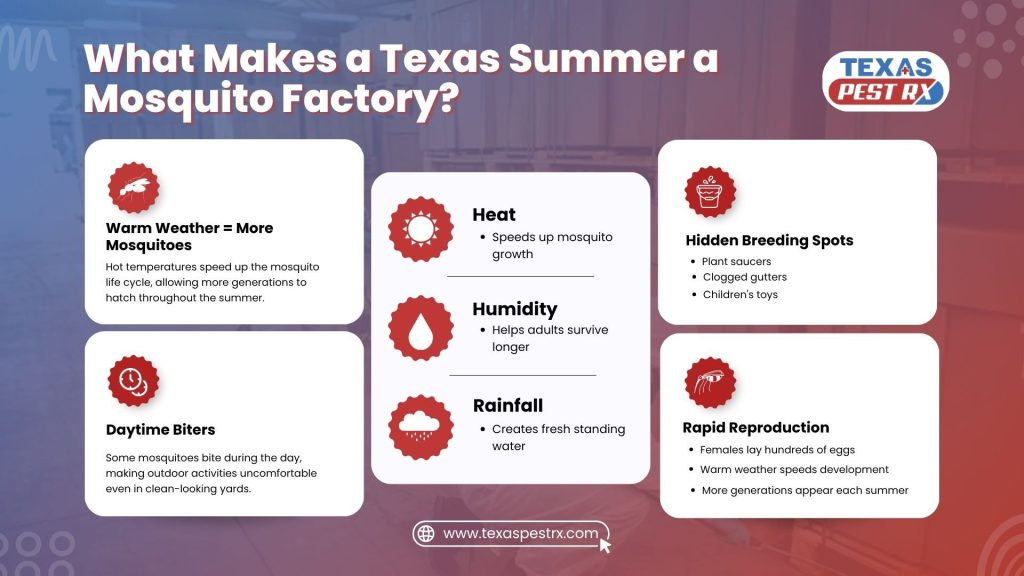
Heat and humidity are the two switches that flip mosquito season into high gear. Mosquitoes are cold-blooded, so warm air speeds up every stage of their life. In spring, an egg might take 10 to 14 days to reach a biting adult. Once the July heat settles over Central and South Texas, that same cycle can finish in 7 to 10 days. Faster cycles mean more generations packed into one summer, and each female can lay a few hundred eggs in her short life.
To picture the math, start with one female laying around 200 eggs in late May. If half of those become females and each of them lays another 200 a week later, the numbers run into the thousands by the Fourth of July from a single starting mosquito. That snowball is why a yard that felt fine in April can feel unlivable by mid-July, even though nothing about the yard itself changed.
Humidity matters because adult mosquitoes dry out and die quickly in dry air. The sticky, muggy stretches common from Seguin to Schertz keep adults alive longer, giving them more time to bite and breed. Add the pop-up thunderstorms that roll through most summer afternoons, and you get the third ingredient: fresh puddles. Every rain refills buckets, low spots, clogged gutters, and plant saucers, and those small pockets of water are all a mosquito needs.
There is one more local twist. The most common backyard biters here, like the Asian tiger mosquito, prefer tiny containers of water rather than big ponds. So a tidy-looking yard can still be loaded with breeding sites hiding in a kid’s toy or a folded tarp. These container breeders also bite during the day, not just at dusk, which is why an afternoon barbecue can turn into a slapping match even when the lawn looks spotless.
Where Do Mosquitoes Breed in a Typical Texas Yard?
They breed in any container that holds water for more than a few days, and most of those spots are easy to miss. If you walk your yard after a storm, you will likely find more water than you expect. Standing water mosquitoes do not need to be deep. A bottle cap’s worth is enough for some species. Proper pest control can help prevent mosquito problems by targeting these breeding areas.
Here are the usual breeding spots around homes in the San Antonio region:
- Plant saucers and pot trays under patio containers
- Clogged gutters that hold a shallow ribbon of water
- Buckets, watering cans, and wheelbarrows left upright
- Kid toys, sandbox lids, and upturned frisbees
- Tarps, grill covers, and pool covers with sagging pockets
- Birdbaths and pet water bowls that sit untouched for days
- Old tires, even ones used as planters or playground borders
- Low spots in the lawn or along fence lines that pool after rain
- AC condensate drip zones and clogged French drains
- Corrugated drain pipe that traps water in its ridges
A few of these surprise people. The ridged black corrugated pipe sold for downspout extensions holds a teaspoon of water in every ribbon, and that adds up to dozens of tiny nurseries in a single ten-foot run. Bromeliads and other cupped plants collect water in their leaf bases. Even the rim channel around a trash can lid, or the bottom track of a sliding glass door, can hold enough water to raise a brood.
Adults do not spend all day in the open. They rest in cool, shady, humid places when the sun is hot: tall grass, dense shrubs, under decks, behind downspouts, and in the leaf litter along your fence. Knowing both the breeding spots and the resting spots tells you where to focus, because killing the water sources cuts the next generation, while clearing the resting zones cuts the adults biting you tonight. Think of it as two jobs running at once, one aimed at the babies in the water and one aimed at the grown mosquitoes in the shade.
DIY Steps That Actually Reduce Mosquitoes
The single most effective free step is dumping standing water every three to four days, because that breaks the breeding cycle before larvae become adults. Most of what people try, like citronella candles or porch sprays, barely dents the population. The chores below do the real work, and they cost little or nothing.
Empty and scrub water weekly
Walk the yard once a week and after every storm. Tip out saucers, buckets, toys, and tarps. Scrub birdbaths and pet bowls instead of just topping them off, since eggs stick to the sides.
Refresh birdbath water every few days. For water you cannot dump, like a rain barrel or ornamental pond, mosquito dunks that contain Bti work well. Bti is a natural bacterium that kills larvae and is considered safe around pets, fish, and people when used as directed. One dunk treats about 100 square feet of surface water and lasts roughly 30 days, so a single bag covers most of a season.
Fix the drainage and gutters
Clean gutters so they drain fully. Fill or regrade low spots in the lawn that puddle for days. Flush out corrugated drain pipe and French drains. Make sure your AC condensate line drains to a spot that does not pool. If you have a flat section of yard that holds water after every storm, a few bags of soil to build a gentle slope, or a small dry well filled with gravel, can erase a breeding zone for good, rather than fighting it every week.
Cut back the resting zones
Mow regularly and trim dense shrubs, tall grass, and weedy fence lines so air and sun reach those shady pockets. Rake up leaf litter under decks and along beds. Thinning the cool, damp hideouts gives adults fewer places to wait out the heat. Pay special attention to the north side of the house and any spot that stays shaded past noon, since those are the cool corners adults retreat to when the temperature spikes.
Make your patio less friendly
Mosquitoes are weak fliers. A couple of oscillating fans on the porch can keep them off you during evening dinners. Tight screens on porches and doors block them from indoor and shaded spaces. Wearing an EPA-registered repellent with DEET, picaridin, or oil of lemon eucalyptus rounds out solid backyard mosquito control without any spraying. Skip the gadgets that promise miracles: bug zappers mostly kill harmless insects, and ultrasonic apps do nothing, so save that money for fans and screens that actually move the needle.
These steps, done together and kept up all season, can significantly reduce a yard’s mosquito numbers. The catch is consistency. Skip two weeks in July, and the population rebuilds fast. A simple trick is to tie the water-dumping walk to something you already do, like taking out the trash or mowing, so it never slips your mind during the busy part of summer.
When Is Fogging or Barrier Treatment Worth It?
A barrier treatment is worth it when you have done the yard chores and the biting still ruins your evenings, or when you have an event, a wooded lot, or a yard backing to a creek or greenbelt. These are the situations DIY cannot fully solve, because adults keep flying in from drainage ditches, neighbors’ yards, and brushy areas you do not control.
Here is how the common options differ:
| Option | What it does | How long does it last | Best for |
| Barrier spray | Coats’ shady resting zones to kill adults on contact | About 3 to 4 weeks | Ongoing monthly relief |
| Fogging | Knocks down adults flying right now | Hours in a day | A party or one-time event |
| Larvicide | Kills larvae in water you cannot drain | Up to 30 days | Ditches, low ponds, rain barrels |
A barrier treatment is a residual spray applied to the shady leaf undersides, shrubs, fence lines, and deck areas where adults rest. It keeps working for roughly three to four weeks, which is why most plans run on a monthly schedule through mosquito season. This is the workhorse for ongoing relief. Fogging knocks down adults flying right now, so it is great for a party or wedding because it clears the air for that evening, but it does not last and is usually paired with a barrier program rather than used alone. Larvicide is dropped into standing water you cannot drain, like a ditch or low pond, to stop the next batch before they fly.
A good mosquito treatment program usually mixes these: larvicide on the water you cannot remove, a residual barrier on the resting zones, and optional fogging before a big gathering. Pricing varies by yard size and how wooded the property is, so ask for a quote rather than expecting one flat rate. As a rough guide, many quarter-acre lots in this area land somewhere in the range of a monthly fee comparable to a couple of dinners out, with wooded or creek-side lots running higher because there is more cover to treat. Many homeowners in towns like Cibolo and San Marcos find that a monthly seasonal plan from May through October is the sweet spot, since that covers the hottest, wettest stretch when populations peak.
If you are already dealing with other warm-weather pests like scorpions or the millipedes that wander indoors after heavy rain, it can be worth bundling. We often handle a few issues in one visit, which keeps the whole yard easier to manage and usually costs less than booking each service on its own.
How Do You Protect Kids and Pets Safely?
You protect them by choosing the right products, applying them correctly, and keeping kids and pets off treated areas until they dry. Most modern barrier products break down within hours of drying and are applied to plants and resting zones, not lawns where kids play, so the exposure window is short when the work is done right.
A few simple rules keep everyone safe:
- Keep children and pets indoors during any spray and until surfaces are dry, usually 30 minutes to a few hours, depending on the product. Ask your technician for the exact re-entry time.
- Use Bti dunks or granules in ponds and rain barrels. They target mosquito larvae and are gentle on fish, frogs, dogs, and people.
- For repellents on skin, use kid-safe options. The CDC notes products with DEET, picaridin, or oil of lemon eucalyptus are effective, but oil of lemon eucalyptus is not recommended for children under three.
- Dress kids in long sleeves and pants at dusk when mosquitoes are most active, and use mosquito netting over strollers and playpens.
- Empty pet water bowls and birdbaths every couple of days, since those double as breeding sites and refresh the water your animals actually drink.
It also helps to walk the yard with the technician on the first visit so you can point out the sandbox, the dog run, and the vegetable garden. Most providers will skip or hand-treat those zones, and a good one would rather know up front than guess. Store any leftover repellents and dunks out of reach of kids and pets, and rinse skin repellent off children once they come inside for the night.
If anyone in the home has asthma or chemical sensitivities, tell your provider up front. A licensed technician can adjust the plan, time the visit around your schedule, and point out which areas to avoid until dry. The goal is fewer bites and fewer disease risks, like West Nile, without trading one worry for another.
Ready to Take Your Evenings Back?
You can do a lot in a weekend: dump the water, clean the gutters, trim the shade, and add a fan. When the yard still bites back, that is the point where a barrier plan earns its keep. We serve homeowners across the San Antonio region and the smaller towns around it, and you can see service areas and book a visit through Texas Pest RX. A steady routine through the hot months beats fighting a swarm in August.


