
 260 Reviews


You walk into your kitchen, grab a glass of water, and there it is… a thin line of ants marching along your countertop like they own the place. If you’re seeing ant trails in your kitchen, you’re not alone. This is one of the most common pest issues in Texas homes, especially as the weather shifts and insects start looking for food, water, and shelter indoors. If you’re already dealing with this and want a closer look at treatment options, take a look at our ant control services for Texas homes.
At first glance, it might seem like a small nuisance. A quick wipe, maybe some spray, and they’re gone… right? Not quite. That trail you’re seeing is only a tiny part of a much bigger system.
Let’s break down what’s really happening behind those ant trails, why it’s so common in places like Floresville, La Vernia, Stockdale, and nearby areas, and what you can realistically do about it.
Why Ant Trails Show Up in the First Place
Ants don’t just wander randomly. When you see a trail, you’re actually looking at a well-organized food supply route.
Here’s how it works:
- A scout ant finds a food source in your kitchen
- It heads back to the colony, leaving behind a scent trail
- Other ants follow that exact path to collect food
- The trail gets stronger as more ants travel it
That “line” of ants is basically a highway. And the more successful it is, the busier it gets.
In Texas, this happens often because of warm temperatures, long seasons, and easy access to food indoors. Kitchens are prime targets. Crumbs, spills, pet food, even tiny bits of sugar you can’t see… It’s all fair game.
What Ant Trails Usually Mean (It’s Not Just One Ant)
Seeing one or two ants might not be a big deal. Seeing a steady trail? That’s a different story.
It usually means:
1. There’s a Nearby Colony
Ants don’t travel far unless they have to. If they’ve built a trail into your kitchen, chances are the colony is close by. It could be:
- Inside your walls
- Under your foundation
- In your yard, just outside the home
2. They’ve Found a Reliable Food Source
Ants are efficient. If they keep coming back, it means your kitchen is feeding them consistently.
Even something small like:
- A sticky spot near the trash can
- A drop of syrup on the counter
- Pet food left out overnight
That’s enough to keep the trail active.
3. The Problem Is Growing
Ant colonies don’t stay small. If the trail isn’t addressed, more ants will join, and the activity will spread to other areas of your home.
Why Texas Homes Deal With This So Often
If you’re in areas like Wilson County, Bexar County, Guadalupe County, or Atascosa County, ant activity is just part of life.
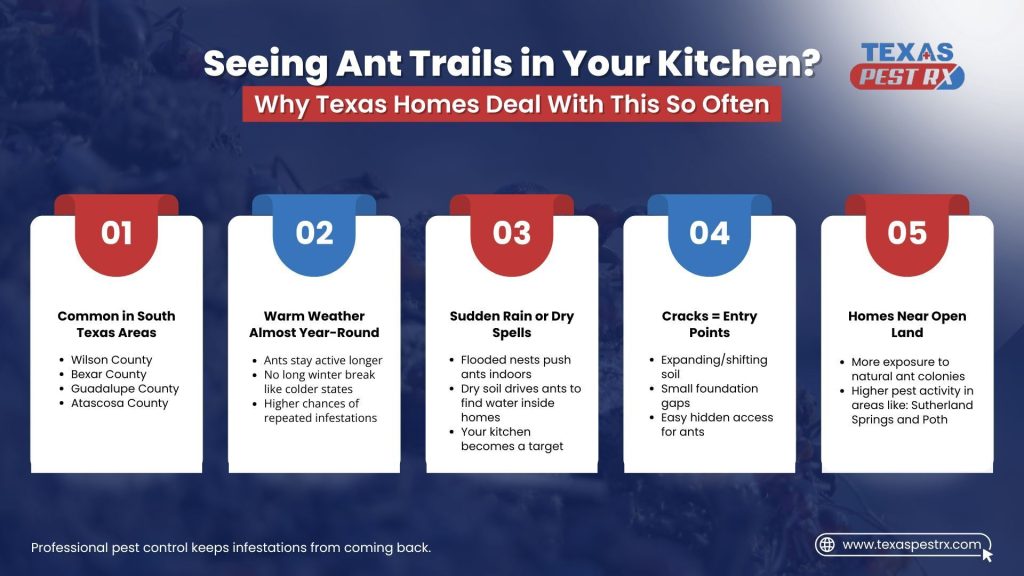
A few reasons why:
Warm Climate Almost Year-Round
Ants stay active longer in Texas compared to colder states. That means more chances for infestations.
Sudden Weather Changes
Heavy rain or dry spells push ants indoors. When their outdoor environment becomes unstable, your home becomes their backup plan.
Soil and Foundation Types
Many homes in South Texas sit on soil that cracks or shifts. That creates easy entry points for ants to sneak inside.
Close Proximity to Nature
Homes in places like Sutherland Springs or Poth often sit closer to open land. That naturally increases pest activity, which is why many homeowners end up needing pest control in Sutherland Springs to keep infestations under control.
The Most Common Kitchen Ants in Texas
Not all ants behave the same. The type of ant can change how serious the issue is and how it should be handled.
Odorous House Ants
These are very common indoors. Crush one, and you might notice a strange smell. They’re attracted to sweets and moisture.
Argentine Ants
Known for forming massive colonies. If you’re seeing long trails, these could be the ones.
Fire Ants
More aggressive and usually found outside, but they can come indoors if conditions push them.
Carpenter Ants
These don’t eat wood but tunnel through it. If they’re inside, it could point to moisture issues or wood damage.
Why DIY Fixes Don’t Always Work
It’s tempting to grab a spray and handle it quickly. And sure, it might kill the ants you see.
But here’s the catch… it doesn’t solve the real problem.
Sprays Break the Trail, Not the Colony
You might wipe out the visible ants, but the colony is still active. They’ll just create a new trail somewhere else.
Some Products Make It Worse
Certain sprays can scatter the colony, causing ants to spread deeper into your home instead of leaving.
You’re Only Treating the Surface
Without finding the source, you’re basically playing whack-a-mole with ants.
What Actually Works to Stop Ant Trails
Getting rid of ant trails for good means thinking beyond what’s visible.
Clean the Trail Properly
Regular cleaning isn’t enough. You need to remove the scent trail.
Try using:
- Vinegar and water solution
- Mild soap and water
This helps erase the chemical path ants follow.
Cut Off Food Sources
It sounds simple, but it matters a lot.
- Wipe counters regularly
- Store food in sealed containers
- Don’t leave dirty dishes overnight
- Keep trash tightly closed
Seal Entry Points
Look for small gaps around:
- Windows and doors
- Pipes under the sink
- Cracks in walls or flooring
Even tiny openings can become entry routes.
Address Moisture
Ants love water just as much as food.
- Fix leaky pipes
- Don’t let water sit in sinks
- Keep areas under appliances dry
When It’s Time to Call in Help
Sometimes, no matter how clean your kitchen is, the ants keep coming back. That’s usually a sign the colony is well-established.
If you’re dealing with:
- Long, consistent ant trails
- Multiple entry points
- Recurring infestations
It’s worth getting a proper inspection.
In areas like Floresville, La Vernia, and Stockdale, recurring ant issues are often tied to outdoor colonies that need targeted treatment, not just indoor fixes.
A Quick Note on Local Patterns
Homes across Wilson County and nearby regions tend to see spikes in ant activity during:
- Early spring, when colonies expand
- Summer, when heat drives them indoors
- After heavy rains, when nests get flooded
So if you’re suddenly noticing trails, it’s not random. It’s a seasonal behavior meeting the conditions around your home.
Don’t Ignore That First Trail
It’s easy to brush it off at first. A few ants here and there don’t feel urgent.
But here’s the thing… ants rarely show up without a reason. That trail is a signal. It means your home has something they need, and they’ve figured out how to get it.
The sooner you deal with it, the easier it is to stop.
Final Thoughts
Seeing ant trails in your kitchen isn’t just about cleanliness or a one-time issue. It’s usually tied to a nearby colony, a steady food source, and easy access to your home.
If you’ve been wiping them away only to see them return, you’re not imagining it. That’s how ant systems work.
We deal with this every day at Texas Pest RX, especially in homes around Floresville and the surrounding areas. If the trails keep coming back or spreading, it’s a good idea to get a proper look at what’s going on behind the scenes. A targeted approach saves time, frustration, and repeated problems.


