
 260 Reviews


Step outside in the evening, and you can almost feel it in the air. Warmer nights, a bit more humidity, and that familiar high-pitched buzz near your ear. Mosquito season has officially started in Texas, and it doesn’t take long before a few bites turn into a full-blown nuisance.
For many homeowners, this is the time when outdoor spaces slowly become off-limits. You might have plans for backyard barbecues or relaxing evenings, but mosquitoes tend to take over fast if nothing is done early. The good news? A few smart steps right now can make a huge difference before things spiral.
Whether you’re dealing with growing activity in San Antonio, seeing early swarms near New Braunfels, or searching for mosquito control services in Floresville, this guide will help you understand what’s happening and how to stay ahead of it.
Why Mosquito Season Starts So Fast in Texas
Texas weather doesn’t ease into seasons. It shifts quickly, and mosquitoes take full advantage of that.
Once temperatures consistently rise above 50°F, mosquitoes begin breeding. Add a little rain and standing water, and you’ve got the perfect setup. Spring showers and early summer humidity speed up their life cycle, meaning eggs can turn into biting adults in less than a week.
That’s why it often feels like mosquitoes appear overnight. One day, things are manageable, and the next, your yard feels like their territory.
What Makes Your Yard So Attractive to Mosquitoes?
Mosquitoes don’t just show up randomly. They’re drawn to very specific conditions, and most yards unknowingly provide exactly what they need.
Here are the main culprits:
1. Standing Water
This is the big one. Even small amounts of water can become breeding grounds.
Common spots include:
- Flower pots and trays
- Birdbaths
- Clogged gutters
- Kiddie pools
- Old tires or containers
It doesn’t take much. A bottle cap full of water can support mosquito larvae.
2. Shade and Dense Vegetation
Mosquitoes avoid direct sunlight. They prefer cool, shaded areas where they can rest during the day.
If your yard has:
- Thick shrubs
- Overgrown grass
- Dense landscaping
…it becomes the perfect daytime hiding spot.
3. Humidity and Poor Airflow
Still, humid air helps mosquitoes thrive. Yards with little airflow, especially those surrounded by fences or heavy greenery, tend to hold moisture longer.
The Real Problem Isn’t Just Bites
It’s easy to think of mosquitoes as just annoying, but there’s more to it than itchy skin.
Mosquitoes in Texas are known to carry diseases like West Nile virus. While not every mosquito is infected, the risk increases as populations grow.
There’s also the comfort factor. When mosquitoes take over your yard, you stop using it. Outdoor dinners, kids playing outside, and even basic yard work become frustrating.
So yes, it starts with a few bites, but it often turns into something bigger if ignored.
Early Action Beats Late Reaction
Here’s something many homeowners learn the hard way: waiting makes everything tougher.
Once mosquito populations grow, reducing them takes more effort, more treatments, and more time. Starting early keeps things manageable.
Think of it like weeds in a garden. Pull a few early on, and you’re fine. Ignore them, and suddenly they’re everywhere.
Simple Steps You Can Take Right Now
You don’t need a full overhaul to make your yard less inviting. Small, consistent actions go a long way.
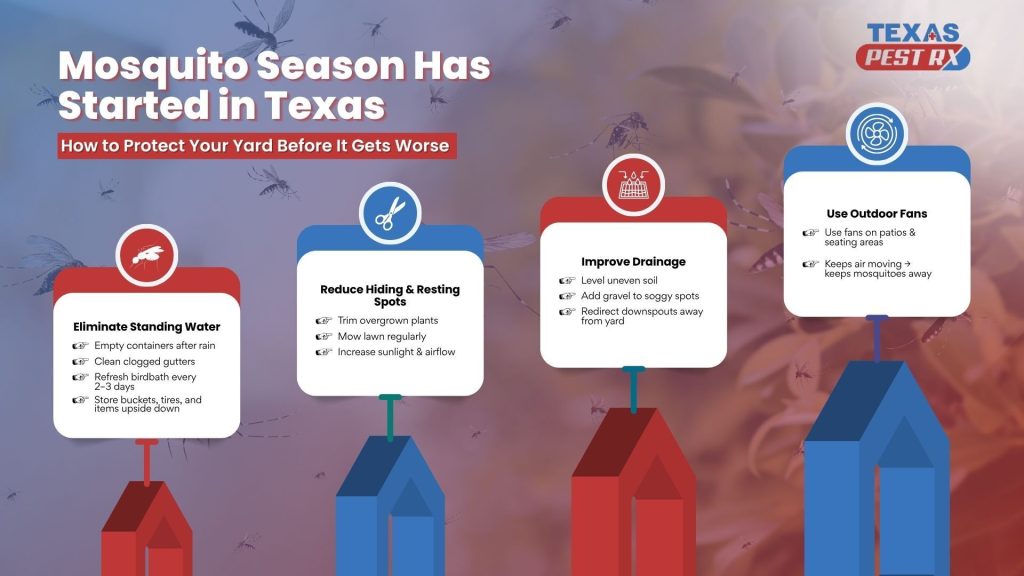
Eliminate Standing Water
Walk around your yard and check anything that can hold water.
Make it a habit to:
- Empty containers after rain
- Clean gutters regularly
- Refresh birdbath water every few days
- Store unused items upside down
Keep Your Yard Trimmed
Cut back overgrown plants and mow regularly. This reduces shaded resting areas.
Even a slight increase in sunlight and airflow can make your yard less appealing to mosquitoes.
Improve Drainage
If certain areas of your yard stay wet longer than others, it may be worth improving drainage.
This could mean:
- Adjusting soil levels
- Adding gravel to problem spots
- Redirecting downspouts
Use Outdoor Fans
This one’s simple but effective. Mosquitoes aren’t strong flyers.
A steady breeze from a fan can make patios and seating areas far more comfortable.
When DIY Isn’t Enough
There’s a point where basic steps just don’t cut it, especially in areas with heavy mosquito activity.
If you’re noticing:
- Mosquitoes are active during the day
- Large swarms at dusk
- Bites even after basic prevention
…it may be time to look at professional help.
This is especially true in places like Wilson County or near water sources, where mosquito populations can build quickly.
What Mosquito Control Actually Does
A lot of people assume it’s just spraying and hoping for the best. In reality, it’s more targeted than that.
A proper treatment plan usually includes:
Inspection
Identifying where mosquitoes are breeding and resting. This step is often overlooked but makes a big difference.
Targeted Treatment
Applying treatments to:
- Shrubs and shaded areas
- Standing water zones
- Entry points around the yard
Ongoing Maintenance
Mosquito control isn’t a one-time fix. Regular treatments keep populations down throughout the season.
For homeowners looking into mosquito control in New Braunfels or the surrounding areas, consistency is often what separates short-term relief from long-term results.
Why Timing Matters
Starting treatment early in the season can cut down mosquito populations before they peak.
Once summer hits full force, mosquito numbers can explode. At that point, you’re playing catch-up.
Early spring treatments help break the breeding cycle, which means fewer mosquitoes later on.
Local Conditions Make a Difference
Not every yard in Texas deals with mosquitoes the same way.
For example:
- Homes near open land or wooded areas often see higher activity
- Properties near water sources tend to have more breeding sites
- Suburban neighborhoods with dense landscaping can trap humidity
That’s why local knowledge matters. What works in one area may not work the same in another.
If you’re searching for pest control in San Marcos or nearby regions, it helps to choose a service that understands these local patterns.
Don’t Forget About Other Pests
Mosquito season often overlaps with increased activity from other pests, too.
You might start noticing:
- Ant trails in kitchens
- Wasps building nests
- Increased fly activity
Sometimes, a broader pest control plan makes more sense than treating mosquitoes alone.
For example, stinging insect inspection becomes important if wasps or hornets start appearing alongside mosquito activity.
A Yard You Can Actually Enjoy Again
Let’s be honest. Nobody wants to spend their evening swatting bugs every few seconds.
A well-managed yard feels different. You can sit outside without constantly moving, kids can play without complaints, and gatherings feel relaxed again.
That’s really the goal here. Not just fewer mosquitoes, but a space you actually want to use.
When to Call for Help
If you’re on the fence, here’s a simple way to think about it.
Try basic prevention first. If things still feel out of control after a couple of weeks, it’s probably time to bring in help.
Areas like San Marcos, New Braunfels, and surrounding communities often deal with steady mosquito pressure throughout the season. Waiting too long usually means more work later.
Wrapping It All Together
Mosquito season in Texas doesn’t wait around, and once it starts, it builds quickly. A few small changes now can save you a lot of frustration later.
Start with the basics. Clear standing water, trim your yard, and keep an eye on problem areas. If that’s not enough, there are options that go deeper and keep things under control long-term.
At Texas Pest RX, we’ve seen how quickly mosquito issues can grow in this region. If your yard is already feeling overrun or you want to stop it before it gets there, we’re here to help you take back your space and enjoy it again.


